
The Art of Balancing Color and Texture in a Garden
A beautiful garden is about more than selecting your favorite plants—it’s about creating a landscape that feels cohesive, inviting, and visually interesting throughout the year. Two of the most important design principles in professional landscaping are color and texture. When thoughtfully combined, these elements add depth, contrast, and movement, transforming an ordinary yard into an extraordinary outdoor living space.
Whether you’re refreshing an existing landscape or starting from scratch, understanding how color and texture work together will help you create a garden that looks balanced in every season.
Why Color and Texture Matter
Color and texture are the foundation of great landscape design. Color influences the mood of your outdoor space, while texture creates visual depth and keeps the landscape from feeling flat or one-dimensional.
Warm colors like reds, oranges, and yellows bring energy and excitement to a garden, making spaces feel vibrant and welcoming. Cooler tones such as blues, purples, and soft greens evoke a sense of calm and relaxation, making them ideal for peaceful backyard retreats.
Texture refers to the visual and physical characteristics of plants—from the soft, airy appearance of ornamental grasses to the bold, sculptural form of agaves and succulents. Combining a variety of textures creates contrast, highlights focal points, and adds year-round interest.
When color and texture are balanced, the landscape feels intentional, layered, and naturally beautiful.
Designing with Color
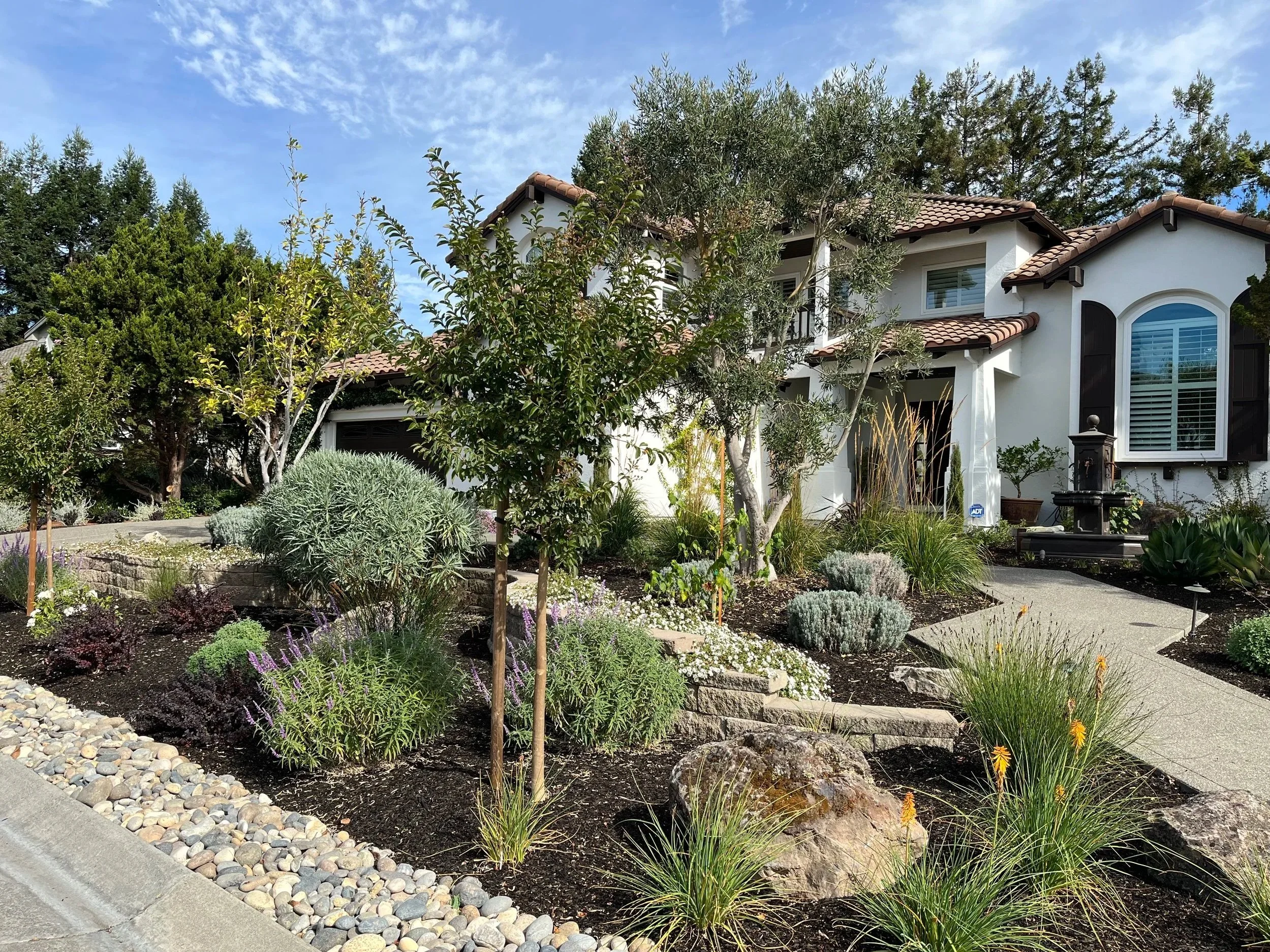
Natural boulders and colorful flowering plants combine to create a balanced, visually striking landscape with year-round appeal.
Start with a Cohesive Color Palette
Just as interior designers choose coordinated color schemes, successful landscapes begin with a thoughtful palette.
Popular approaches include:
Analogous color schemes use neighboring colors on the color wheel, such as blues, purples, and pinks, to create a harmonious and relaxing garden.
Complementary color schemes pair opposite colors like purple and yellow or blue and orange to create bold contrast and eye-catching focal points.
Monochromatic designs feature varying shades of a single color, creating a refined, elegant appearance.
Limiting your color palette helps unify the landscape while preventing it from feeling cluttered or overwhelming.
Let Foliage Provide Year-Round Color
Flowers may steal the spotlight during their blooming season, but foliage provides lasting beauty long after blooms have faded.
Many plants offer striking leaf colors that enhance the landscape throughout the year, including:
Burgundy Japanese maples
Silver-blue eucalyptus
Chartreuse ornamental grasses
Variegated hostas
Blue fescue
Heuchera with deep purple foliage
Using colorful foliage ensures your garden remains visually appealing even when flowers aren’t in bloom.
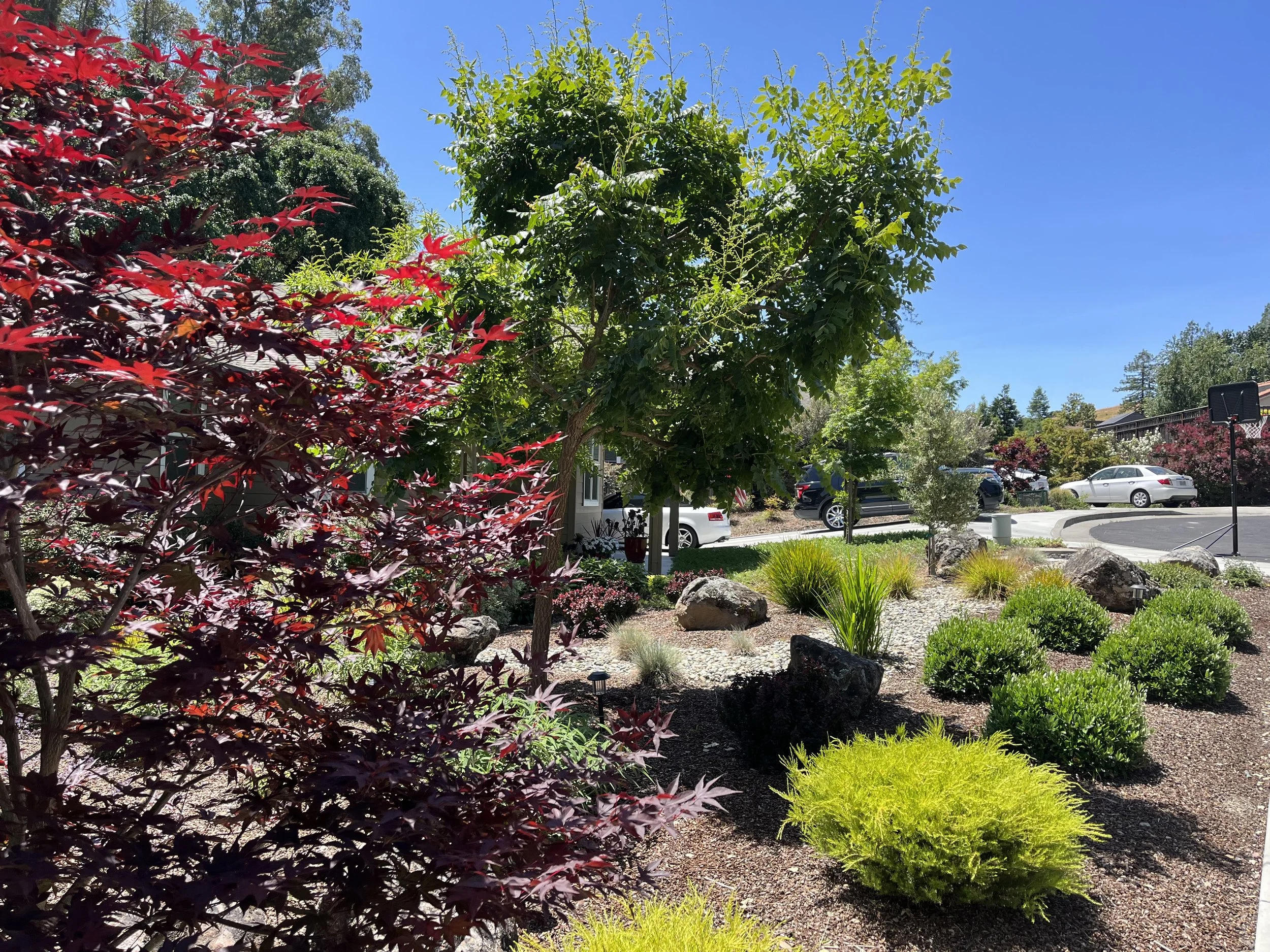
Discover how combining color, texture, and seasonal interest creates beautiful, balanced gardens that enhance curb appeal and outdoor living.
Use Color to Create Focal Points
Bright colors naturally attract attention.
Strategically placing colorful plants near entryways, patios, walkways, water features, or specimen trees helps guide visitors through the landscape while emphasizing key design elements.
Repeating accent colors throughout the garden also creates rhythm and visual continuity.
Designing with Texture
Layer Fine, Medium, and Bold Textures
One of the easiest ways to create depth is by combining plants with different leaf sizes and growth habits.
Fine textures include:
Ornamental grasses
Ferns
Lavender
Rosemary
Medium textures include:
Salvia
Boxwood
Hydrangeas
Many flowering perennials
Bold textures include:
Agave
Hosta
Elephant ears
Large succulents
Layering these textures creates dimension and prevents the garden from appearing flat or monotonous.
Create Contrast
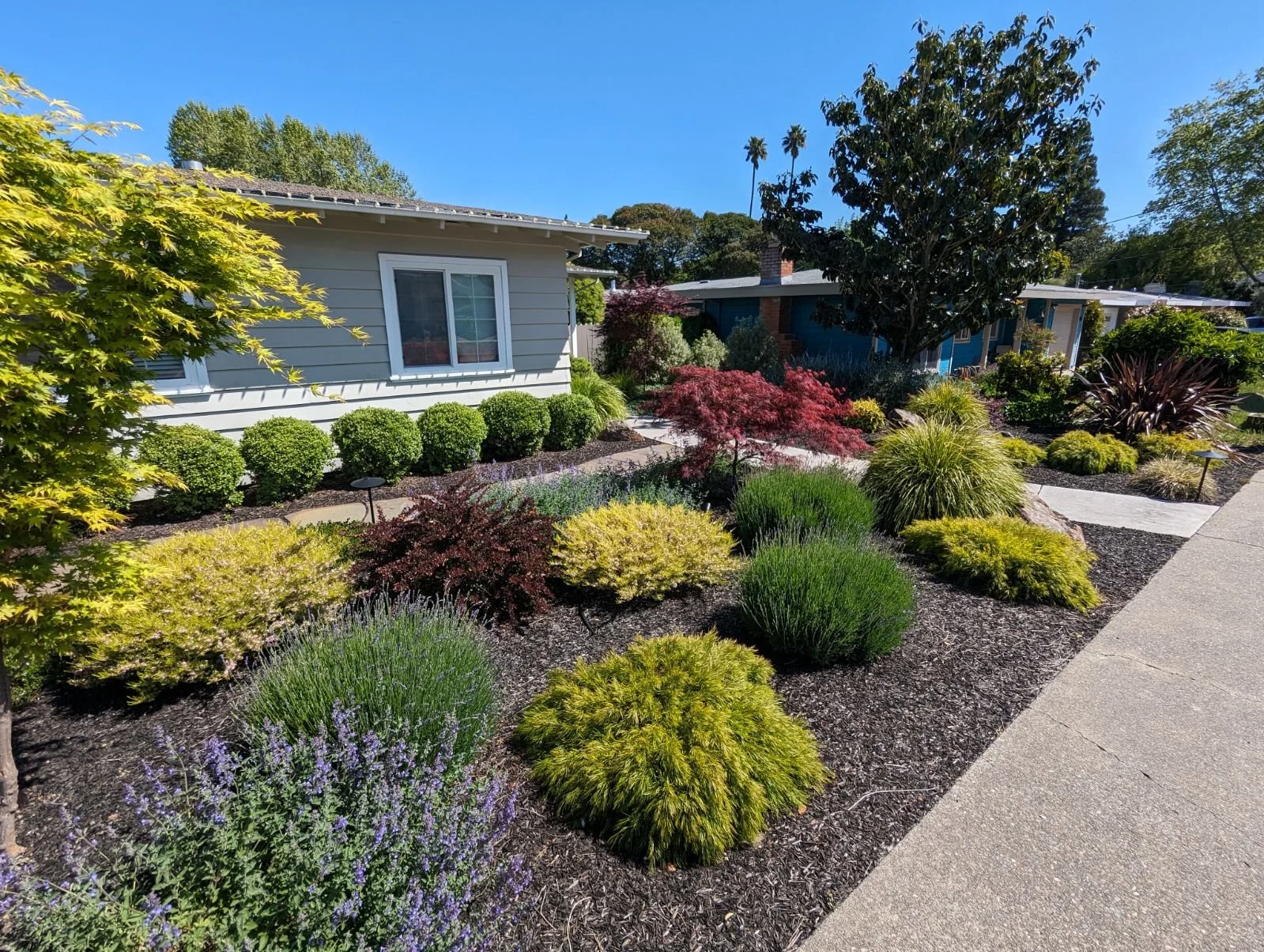
Contrasting plant textures and vibrant foliage colors create depth, visual interest, and balance in this professionally designed Sonoma County garden.
Some of the most striking landscapes rely on contrast.
Imagine soft, flowing ornamental grasses planted beside structured boxwoods or broad-leaf hostas growing alongside delicate ferns. These combinations highlight the unique qualities of each plant while adding visual excitement.
Contrast also enhances architectural features like retaining walls, pathways, and patios by softening hard edges with layered plantings.
Texture Helps Define Garden Style
Texture plays an important role in establishing the character of your landscape.
Soft, flowing plants create a relaxed, naturalistic feel that works well in cottage and meadow gardens.
Bold, sculptural plants complement modern and Mediterranean landscapes.
Mixed textures create a balanced look that feels timeless and inviting.
Choosing textures that align with your home’s architecture and personal style helps create a unified outdoor environment.
Bringing Color and Texture Together
The most memorable landscapes combine color and texture in thoughtful ways.
For example:
Soft ornamental grasses with muted green foliage blend beautifully into the background, creating movement and tranquility.
Bright flowering plants paired with bold, architectural succulents become dramatic focal points.
Repeating similar foliage colors and leaf textures throughout the garden creates rhythm and visual flow.
Think of your landscape as a living work of art—color provides the palette, while texture adds depth and dimension.
Design for Every Season
A successful landscape should remain attractive throughout the year, not just during spring and summer.
When selecting plants, consider how they will contribute during each season.
Spring
Fresh green foliage, flowering bulbs, and colorful early blooms bring new life to the garden.
Summer
Lush foliage, vibrant flowers, and ornamental grasses provide fullness and energy.
Fall
Warm foliage colors, seed heads, berries, and ornamental grasses add rich texture and seasonal interest.
Winter
Evergreens, colorful bark, sculptural branches, and ornamental grasses provide structure when deciduous plants are dormant.
Planning for year-round interest ensures your landscape remains beautiful in every season.
Professional Tips for a Balanced Garden
Professional landscape designers often use a few simple techniques to create cohesive outdoor spaces:
Plant in groups of three, five, or seven for a more natural appearance.
Repeat colors and plant varieties throughout the landscape to establish rhythm.
Blend evergreen and deciduous plants for year-round structure.
Incorporate natural materials such as stone, wood, and decorative boulders to complement plant textures.
Use ornamental grasses to soften hardscape features and create movement in the landscape.
Balance colorful flowering plants with attractive foliage for continuous visual interest.
Why Professional Landscape Design Makes a Difference
Creating a balanced landscape requires more than selecting attractive plants. Professional landscape designers understand how mature plant sizes, seasonal changes, color relationships, and texture combinations work together to create outdoor spaces that remain beautiful for years.
At Moonlight Landscapes, we design custom landscapes throughout Sonoma County that blend color, texture, hardscaping, and thoughtful plant selection into outdoor spaces that are both functional and visually stunning. Whether you’re planning a complete landscape renovation or refreshing an existing garden, our experienced team can help bring your vision to life.
Final Thoughts
A truly beautiful garden is one that feels balanced, layered, and intentional. By thoughtfully combining color, texture, and seasonal interest, you can create a landscape that captures attention, encourages exploration, and provides enjoyment throughout the year.
Whether your style is modern, Mediterranean, cottage, or contemporary, the careful use of color and texture is what transforms a collection of plants into a cohesive outdoor masterpiece.
Texture Helps Define Garden Style
Texture plays an important role in establishing the character of your landscape.
Soft, flowing plants create a relaxed, naturalistic feel that works well in cottage and meadow gardens.
Bold, sculptural plants complement modern and Mediterranean landscapes.
Mixed textures create a balanced look that feels timeless and inviting.
Choosing textures that align with your home’s architecture and personal style helps create a unified outdoor environment.
Bringing Color and Texture Together
The most memorable landscapes combine color and texture in thoughtful ways.
For example:
Soft ornamental grasses with muted green foliage blend beautifully into the background, creating movement and tranquility.
Bright flowering plants paired with bold, architectural succulents become dramatic focal points.
Repeating similar foliage colors and leaf textures throughout the garden creates rhythm and visual flow.
Think of your landscape as a living work of art—color provides the palette, while texture adds depth and dimension.
Design for Every Season
A successful landscape should remain attractive throughout the year, not just during spring and summer.
When selecting plants, consider how they will contribute during each season.
Spring
Fresh green foliage, flowering bulbs, and colorful early blooms bring new life to the garden.
Summer
Lush foliage, vibrant flowers, and ornamental grasses provide fullness and energy.
Fall
Warm foliage colors, seed heads, berries, and ornamental grasses add rich texture and seasonal interest.
Winter
Evergreens, colorful bark, sculptural branches, and ornamental grasses provide structure when deciduous plants are dormant.
Planning for year-round interest ensures your landscape remains beautiful in every season.
Professional Tips for a Balanced Garden
Professional landscape designers often use a few simple techniques to create cohesive outdoor spaces:
Plant in groups of three, five, or seven for a more natural appearance.
Repeat colors and plant varieties throughout the landscape to establish rhythm.
Blend evergreen and deciduous plants for year-round structure.
Incorporate natural materials such as stone, wood, and decorative boulders to complement plant textures.
Use ornamental grasses to soften hardscape features and create movement in the landscape.
Balance colorful flowering plants with attractive foliage for continuous visual interest.
Why Professional Landscape Design Makes a Difference
Creating a balanced landscape requires more than selecting attractive plants. Professional landscape designers understand how mature plant sizes, seasonal changes, color relationships, and texture combinations work together to create outdoor spaces that remain beautiful for years.
At Moonlight Landscapes, we design custom landscapes throughout Sonoma County that blend color, texture, hardscaping, and thoughtful plant selection into outdoor spaces that are both functional and visually stunning. Whether you’re planning a complete landscape renovation or refreshing an existing garden, our experienced team can help bring your vision to life.
Final Thoughts
A truly beautiful garden is one that feels balanced, layered, and intentional. By thoughtfully combining color, texture, and seasonal interest, you can create a landscape that captures attention, encourages exploration, and provides enjoyment throughout the year.
Whether your style is modern, Mediterranean, cottage, or contemporary, the careful use of color and texture is what transforms a collection of plants into a cohesive outdoor masterpiece.